Sunday, 20 December 2015

Amazon reveals new Prime Air drone prototypes
Online retail giant Amazon has revealed its new drone prototype, which aims to deliver packages in less than 30 minutes. The drones weigh 55 pounds and can carry packages weighing up to 5 pounds. They fly under 400 feet and use "sense and avoid" technology to dodge potential obstacles en route to their destination. In March, the Federal Aviation Administration granted Amazon approval to fly drones for research purposes, after first revealing its plans in 2013. If regulators approve the latest version, this futuristic new service could one day become a reality. For more info, see Amazon.com.


 speech bubbleComments »   

New microscope is 2,000 times faster
A new atomic force microscope developed by MIT can scan images 2,000 times faster than existing commercial models. This allows it to capture near-real-time video of nanoscale processes.

new microscope future timeline

State-of-the-art atomic force microscopes (AFMs) are designed to capture images of structures as small as a fraction of a nanometre – a million times smaller than the width of a human hair. In recent years, AFMs have produced desktop-worthy close-ups of atom-sized structures, from DNA strands to individual bonds changing between molecules. But scanning these images is a meticulous, time-consuming process. AFMs have therefore been used mostly for static samples as they are too slow to capture active, changing environments.
Now engineers at MIT have designed an atomic force microscope that scans images 2,000 times faster than existing commercial models. With this new high-speed instrument, the team produced images of chemical processes taking place at the nanoscale, at a rate that is close to real-time video.
In one demonstration of the instrument’s capabilities, the researchers scanned a 70- by-70-micron sample of calcite as it was first immersed in deionised water and later exposed to sulphuric acid. Zooming into an area of interest, they observed the acid eating away at the calcite, expanding existing nanometre-sized pits in the material that quickly merged and led to a layer-by-layer removal of calcite along the material’s crystal pattern, over a period of several seconds.

 2015 mit microscope 2000 times faster nano
Calcite immersed in deionised water.
 2015 mit microscope 2000 times faster nano
Sulphuric acid creating pits in the calcite.

Professor of Mechanical Engineering at MIT, Kamal Youcef-Toumi, says the instrument’s sensitivity and speed will enable scientists to watch atomic-sized processes play out as high-resolution “movies.”
“People can see, for example, condensation, nucleation, dissolution, or deposition of material, and how these happen in real-time – things that people have never seen before,” he says. “This is fantastic to see these details emerging. And it will open great opportunities to explore all of this world that is at the nanoscale.”
The MIT researchers' achievement was made possible through an innovative new technique. This involved controlling the movement of the needle over the sample surface with two actuators (a small, fast scanner and a larger, slower one) in combination with a set of algorithms to ensure they never interfered with each other. At present, this method provides scans at eight to 10 frames per second, but further research is underway to increase this.
“We want to go to real video, which is at least 30 frames per second,” Youcef-Toumi says. “Hopefully we can work on improving the instrument and controls so that we can do video-rate imaging while maintaining its large range and keeping it user-friendly. That would be something great to see.”
The team's design and images, which are based on the PhD work of Iman Bozchalooi – now a postdoc in the Department of Mechanical Engineering – appear in the journal Ultramicroscopy.

"OpenAI" – a new venture to create benevolent artificial intelligence
A team of world-class researchers, engineers and technology experts have announced a non-profit collaboration – OpenAI – that will work to encourage the development of AI that benefits humanity as a whole, unconstrained by a need to generate financial return.

2015 openai artificial intelligence future timeline

OpenAI is a brand new artificial intelligence (AI) research organisation that has just been announced in San Francisco, California. The company aims to advance and develop "friendly" AI in such a way as to benefit humanity as a whole. One of the largest differences between OpenAI and other organisations working on artificial intelligence, is OpenAI's non-profit status. In a press release explaining its founding, OpenAI states that their research will therefore be "unconstrained by a need to generate financial return", allowing them to "better focus on a positive human impact."
Related to this, another major goal of the organisation is to prevent corporations and governments from gaining too much power by them employing advanced AI, and instead making sure that the benefits of AI are divided as equally as possible. To meet that objective, the organisation will aim to "freely collaborate" with other institutions and researchers, by making their research open source.
The team's co-chairs are Tesla Motors and SpaceX CEO Elon Musk and entrepreneur Sam Altman. Former research scientist at Google, Ilya Sutskever, is the research director. Former Stripe CTO Greg Brockman is the CTO. They are supported by $1 billion in commitments from various sources. In the past, many of the employees and board members have openly stated their concern of existential risk from advanced AI – most notably, Elon Musk, who has openly declared his desire to personally oversee research done in this area.
"It's hard to fathom how much human-level AI could benefit society, and it's equally hard to imagine how much it could damage society if built or used incorrectly," the company says in a statement. Artificial intelligence "should be an extension of individual human wills and, in the spirit of liberty, as broadly and evenly distributed as is possible safely."
You can read more on the company's website, OpenAI.com. They can also be followed on Twitter at @open_ai.

Wednesday, 16 December 2015

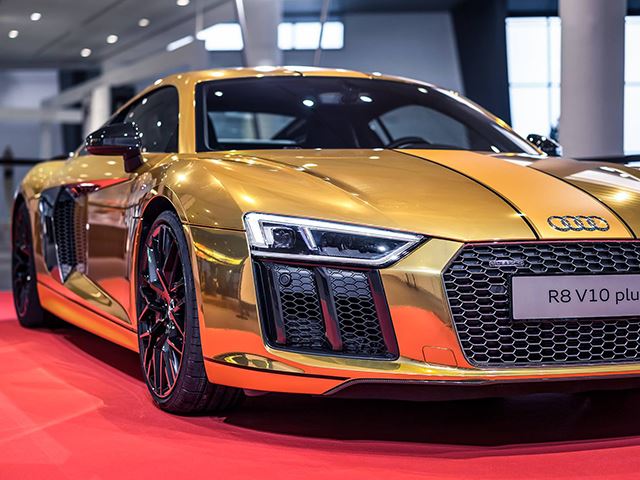
Does Gold Make This German Supercar Flashier That Its Italian Rivals?


Gold makes this supercar a stunner.
The new Audi R8 V10 Plus may be an incredible supercar, but it’s not like a Ferrari or Lamborghini. Instead of being flash and overly flamboyant, the new R8 is discreet, but just as fast. It seems like the automaker has caught gold fever as the second-generation of the R8 gets a ridiculous gold wrap to commemorate the fact the supercar received the Golden Steering Wheel award in the “sports car” category.
Readers of the German magazine Auto Build voted the R8 V10 Plus as the best model in its class.
source : carbuzz  


Monday, 14 December 2015

Why we should go to Mars
Dr Robert Zubrin is an aerospace engineer and author, best known as the driving force behind Mars Direct – a proposal for human settlement of Mars intended to produce significant reductions in the cost and complexity of such a mission. Disappointed with the lack of interest from government in Mars exploration and following the success of his book, The Case for Mars, he established the Mars Society in 1998, an organisation devoted to the colonisation of Mars, by private funding if possible. In this recent video, he explains the three main reasons for going to the Red Planet.


Fusion reactor begins testing in Germany
The first helium plasma test has been successfully conducted at the Wendelstein 7-X fusion device in northeastern Germany. Tests with hydrogen plasma will begin in 2016.

wendelstein 7-x fusion device ignition 2015 future timeline

The first helium plasma was produced yesterday in the Wendelstein 7-X fusion device at the Max Planck Institute for Plasma Physics (IPP) in Greifswald, northeastern Germany. Following more than a year of technical preparations and tests, experimental operation has now commenced according to plan. Wendelstein 7-X, the world's largest stellarator-type fusion device, will investigate the suitability of this type of device for a commercial power station.
After nine years of construction work and over a million assembly hours, the Wendelstein 7-X was completed in April 2014. Operational preparations have been underway ever since. Each technical system was tested in turn, the vacuum in the vessels, the cooling system, the superconducting coils and the magnetic field they produce, the control system, as well as the heating devices and measuring instruments.
On 10th December 2015, the day had arrived: the operating team in the control room started up the magnetic field and initiated the computer-operated experiment control system. This fed around one milligram of helium gas into the evacuated plasma vessel, switched on the microwave heating for a short pulse of 1.3 megawatts – and the first plasma was observed by the installed cameras and measuring devices. The exact moment of ignition was captured in this video.

wendelstein 7-x fusion device ignition

“We’re starting with a plasma produced from the noble gas helium,” explains project leader, Professor Thomas Klinger: “We’re not changing over to the actual investigation object, a hydrogen plasma, until next year. This is because it’s easier to achieve the plasma state with helium. In addition, we can clean the surface of the plasma vessel with helium plasmas.”
The first plasma in the machine had a duration of one tenth of a second and achieved a temperature of around one million ºC. “We’re very satisfied”, concludes Dr. Hans-Stephan Bosch, whose division is responsible for the operation. “Everything went according to plan.” The next task will be to extend the duration of the plasma discharges and to investigate the best method of producing and heating helium plasmas using microwaves. After a break for New Year, the confinement studies will continue in January, which will prepare the way for producing the first plasma from hydrogen.

wendelstein 7-x fusion device ignition 2015 future timeline
The Wendelstein 7-X fusion device. Photo: IPP, Thorsten Bräuer

The Wendelstein 7-X is the largest fusion device created using the "stellarator" concept, which refers to the possibility of harnessing the power source of the Sun, a stellar object. It is planned to operate with up to 30 minutes of continuous plasma discharge, demonstrating an essential feature of a future power plant: continuous operation. By contrast, tokamaks such as ITER can only operate in pulses without auxiliary equipment.
The Wendelstein 7-X is based on a five field-period Helias configuration. It is mainly a toroid – consisting of 50 non-planar and 20 planar superconducting magnetic coils, 3.5 m high – which induce a magnetic field that prevents the plasma from colliding with the reactor walls. The 50 non-planar coils are used for adjusting the magnetic field. It aims for a plasma temperature of 60 to 130 million K.
Stellarators were popular in the 1950s and 60s, but the much better results from tokamak designs led to them falling from favour in the 1970s. Wendelstein 7-X, however, aims to put the quality of the plasma equilibrium and confinement on a par with that of a tokamak for the very first time, potentially offering a new pathway to reliable fusion power.

 wendelstein 7-x fusion device ignition 2015 future timeline
Scheme of coil system (blue) and plasma (yellow) of the Wendelstein 7-X. A magnetic field line is highlighted in green on the plasma surface shown in yellow. Credit: Max Planck Institute for Plasma Physics [CC BY 3.0]
Ford will invest $4.5 billion in electric vehicles by 2020
US car giant Ford has announced it will invest an additional $4.5 billion in electric vehicle technology by 2020, as well as changing how the company develops vehicle experiences for customers.

ford focus electric 2016 electric car technology
Ford Focus Electric, 2016 model.

Ford is adding 13 new electrified vehicles to its portfolio by 2020 – by which time, more than 40 per cent of the company’s global nameplates will come in electrified versions. This represents Ford’s largest-ever electrified vehicle investment in a five-year period.
On the way next year is a new Focus Electric, which features all-new DC fast-charge capability, delivering an 80 per cent charge in just 30 minutes and a projected 160-kilometre (100‑mile) range – an estimated two hours faster than today’s model.
The zero emissions Focus Electric is manufactured in an eco-conscious facility. Its production home, the Michigan Assembly Plant, has one of the largest solar energy generator systems in the state. The new version of the Focus Electric, which starts production in late 2016, will provide features including:
  • SmartGauge with EcoGuide LCD Instrument Cluster, which offers a multitude of customisable displays that can help the driver see real-time electric vehicle power usage to help maximise efficiency. At the end of each trip, a screen provides the distance driven, miles gained through regenerative braking, energy consumed and comparative gasoline information achieved by driving electric.
  • Brake Coach (pictured below), another smart feature that coaches the driver on how to use smooth braking, to maximise the energy captured through the Regenerative Braking System. The more energy a driver captures through braking, the more energy is returned to the battery.
  • “MyFord” mobile app, allowing owners to control and maintain contact with the car remotely, get instant vehicle status information, monitor the car's state of charge and current range, get alerts when the vehicle has finished charging, precondition the car (to be heated or cooled to a desired temperature, by a selected time), locate the vehicle with GPS, remotely start the vehicle, and remotely lock and unlock the car doors.
  • SYNC 3, an enhanced voice recognition communications and entertainment system.
  • Fun-to-drive character, with agile steering and handling engineered into the vehicle to give drivers a more connected feel to the road.
  • Eco-conscious materials, such as soy, bio-foam seat cushions and recycled fabrics.

ford focus electric 2016 electric car technology

Ford’s shift towards electrified vehicle technology is in response to the increasing global demand for cleaner, more efficient vehicles. Electric car ownership is expected to surpass one million this year, with continued rapid growth predicted in the years ahead. Ford is also expanding its research and development programme in Europe and Asia, creating a “hub and spoke” system allowing its global team to further accelerate battery technology and take advantage of market specific opportunities. Ford is also reimagining how to set itself apart in the marketplace by focusing on the customer experience and not just the vehicle itself. The company is changing its product development process to support that shift.
“The challenge going forward isn’t who provides the most technology in a vehicle, but who best organises that technology in a way that most excites and delights people,” said Raj Nair, executive vice president, Product Development and chief technical officer. “By observing consumers, we can better understand which features and strengths users truly use and value and create even better experiences for them going forward.”
In addition to traditional market research, Ford is investing in social science-based research globally, observing how consumers interact with vehicles and gaining new insights into the cognitive, social, cultural, technological and economic nuances that affect product design.
“This new way of working brings together marketing, research, engineering and design in a new way to create meaningful user experiences, rather than individually developing technologies and features that need to be integrated into a final product,” Nair said. “We are using new insights from anthropologists, sociologists, economists, journalists and designers, along with traditional business techniques, to reimagine our product development process, create new experiences and make life better for millions of people.”]

The global expansion of Ford’s electric vehicle research and development programme allows the company’s Electrified Powertrain Engineering teams to share common technologies and test batteries virtually, in real time, to develop new technology faster while reducing the need for costly prototypes.
Ford is expanding in Europe and China to accelerate battery technology development for new markets. By using an innovative hardware and software systems called HIL, or “Hardware in a Loop”, the global team can test battery technology and control system hardware in a virtual environment to simulate how batteries and control modules would behave in different – often punishing – environments in any part of the world.
“Batteries are the life force of any electric vehicle – and we have been committed to growing our leadership in battery research and development for more than 15 years,” said Kevin Layden, director of Ford Electrification Programs.


ford focus electric 2016 electric car technology